Ask a barista trainer, a competition judge, and a home espresso forum moderator what upgrade actually changes your coffee the most, and you'll get the same answer from all three: the grinder, not the machine. It's repeated so often it starts to sound like a slogan, but the mechanism behind it is concrete. Grind consistency determines whether water moves through the coffee bed evenly, and a machine can't fix an unevenly extracted shot no matter how good its pump or boiler is. A great grinder behind a mediocre machine will beat a mediocre grinder behind a great machine, reliably. This list is built from published burr specs, retention figures from manufacturers and independent testers, and where owner consensus in the home espresso community actually lands, not spec-sheet claims taken at face value.
Best Coffee Grinders 2026, Ranked
1. Baratza Encore ESP: Best Budget
Most grinders under $250 force you to pick a lane, espresso or filter, and compromise on the other. The Encore ESP's dual-range burr set puts high-resolution micro-steps for espresso alongside coarser macro-steps for everything else on a single dial, so it doesn't ask you to choose. It can't match single-dose retention, but at around $199, nothing else in its price class comes close on versatility.

Baratza Encore ESP
Amazon listing: Baratza Encore ESP Coffee Grinder ZCG495BLK, Black
Dual-range 40-step burr set tuned for espresso and filter grinds
2. Fellow Ode Gen 2: Best for Filter and Pour-Over
Flat burrs and filter coffee are a natural pairing, and the Ode Gen 2's 64mm flat set is tuned specifically for it. Particle uniformity on filter grinds edges out conical designs here, which translates directly into a brighter, more clearly defined cup on a V60 or Chemex. It's openly not built with espresso as a priority, and that focus is exactly why it excels at the thing it's actually for. Around $399.95.

Fellow Ode Gen 2
Amazon listing: Fellow Ode Gen 2 64mm Flat Burr Coffee Grinder Electric, Single Dose
64mm flat burr grinder tuned for pour-over clarity, 31 grind settings
3. DF64 Gen 2: Best Value Single-Dose
The DF64 Gen 2 goes after grinders costing twice as much on the two things that matter most in single-dose use, workflow and retention, and largely gets there. The catch is setup: it rewards buyers comfortable reading a manual and doing some initial calibration rather than unboxing and grinding immediately. For chasing Niche-adjacent performance without the Niche price tag, it's the most credible option on the market. Around $399.

DF64 Gen 2
Amazon listing: DF64 Gen 2 Single Dose Coffee Grinder (Official Seller) (Black), Small
Single-dose flat burr grinder with near-zero retention
“A grinder with inconsistent particle size can make the same shot taste sour and bitter at once. No amount of machine upgrade fixes that.”
4. Comandante C40 MK4: Best Hand Grinder
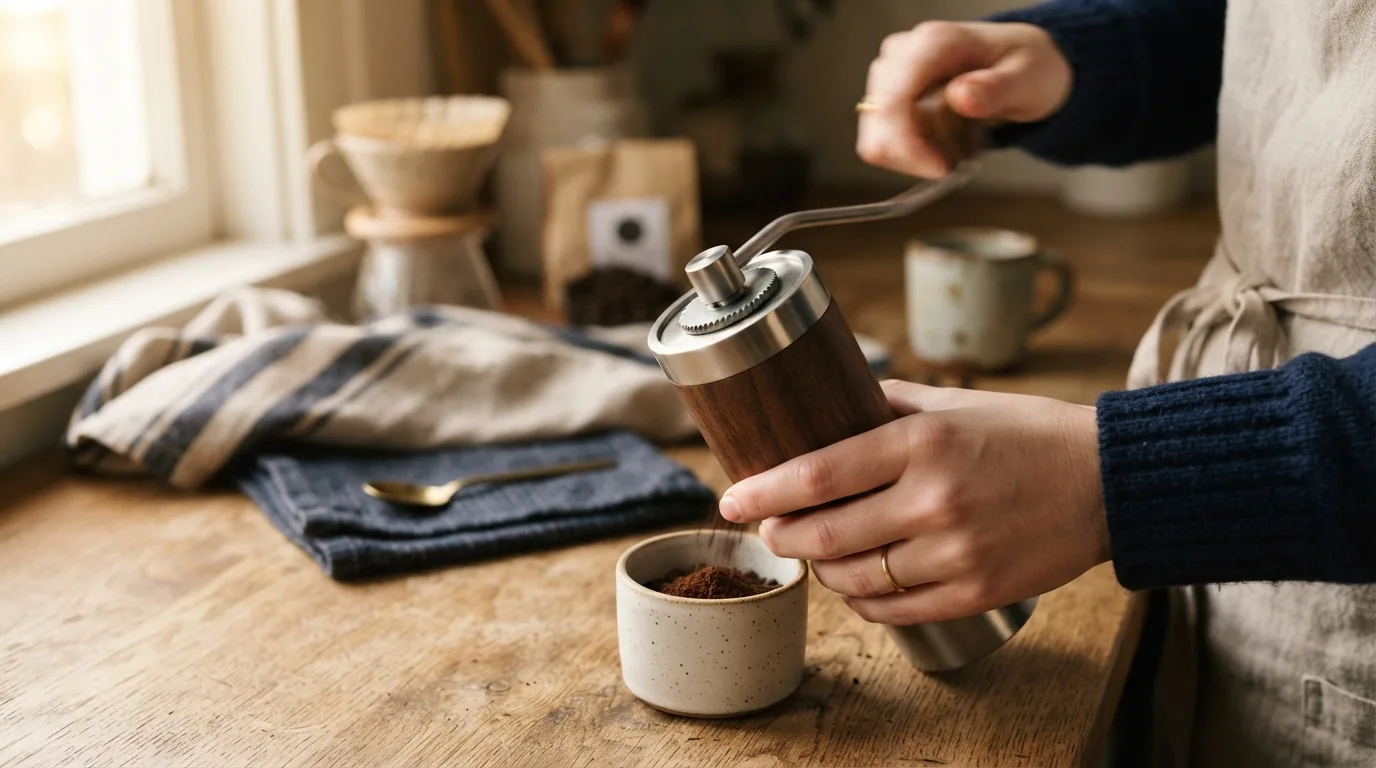
Hardened steel conical burrs turned by hand, more consistently than plenty of electric grinders costing three times as much. It asks for real effort. Cranking out a double shot's worth of beans is genuine work. But the particle consistency it produces is legitimately excellent, and needing no outlet at all makes it the only grinder on this list that travels well. Around $280.

Comandante C40 MK4
Amazon listing: Comandante C40 Hand Grinder MK4 - Black
Precision hand grinder with hardened steel conical burrs
5. Baratza Virtuoso+: Best for Beginners
The Virtuoso+ gives up a slice of the Encore ESP's espresso-grind resolution in exchange for being simply more pleasant to live with day to day. Quieter, more forgiving while dialing in, and backed by Baratza's genuinely strong parts and repair program, a detail that matters far more than it seems to on day one, once a burr set eventually wears out years down the line. Around $249.

Baratza Virtuoso+
Amazon listing: Baratza Virtuoso+ Coffee Grinder ZCG587BLK, Black
Conical burr grinder built for easy dial-in and long-term serviceability
6. Niche Zero: Best Overall
The Niche Zero didn't slowly earn its reputation as the default recommendation, it took the position almost the moment reviewers got their hands on one, and it's held it since. The single-dose hopper feeding 63mm conical burrs leaves next to nothing behind between doses, which means switching beans mid-session doesn't carry yesterday's coffee into today's cup, a genuine rarity under $1,000. The one friction point: it's sold directly through Niche rather than Amazon, so factor in shipping time. Runs around $629.
Niche Zero
Single-dose conical burr grinder with near-zero retention, around $629
Not sold on Amazon: this links to Niche Coffee’s site.
What Actually Separates a Good Grinder From a Great One
Four specs are worth your attention: burr geometry, particle size distribution, retention, and whether the adjustment is stepped or stepless. Everything else on a spec sheet, RPM figures, motor wattage, a touchscreen, is decoration by comparison. A grinder that produces a wide spread of particle sizes hands you a shot that's simultaneously over-extracted and under-extracted in the same sip, and no amount of skill in tamping or dosing fixes that afterward.
Burr geometry is a genuine fork in the road, not a hierarchy. Conical burrs, the kind in the Niche Zero and the Comandante, tend to produce a slightly wider particle spread but a rounder, fuller-bodied cup that a lot of espresso drinkers actually prefer. Flat burrs, like the Ode Gen 2's, cut particle size more uniformly and produce a cleaner, brighter cup that lets origin character come through more distinctly, which is why flat burrs dominate the filter and pour-over side of the category. Neither design beats the other outright; they're built for different outcomes.
Retention is the spec buyers underrate the most. A grinder holding back 1 to 2 grams of stale grounds between doses is quietly mixing yesterday's coffee into today's grind, every time you use it. Per dose the effect is small, but it compounds fast if you rotate between different bags often, stacking on top of whatever staling already happened in storage. Single-dose designs like the Niche Zero and DF64 Gen 2 exist specifically to minimize this, and that engineering is a real part of what the premium buys.
Picking the Right One for You
Grinding for espresso only, and want the best result you can reasonably justify paying for? The Niche Zero is still the benchmark. Filter and pour-over only? The Ode Gen 2's flat burrs justify their premium over a conical design for that specific use. Just trying to stop grinding pre-ground coffee without overspending? The Encore ESP will outgrind machines costing double.
One practical note on upgrade paths: buying the Encore ESP or Virtuoso+ now doesn't lock you in forever. Treat either as a solid two-to-three-year grinder rather than a lifetime purchase. Most people who get seriously into home espresso end up upgrading their grinder at least once anyway, and starting with a genuinely capable budget option beats overspending before you actually know your own preferences.
For the chemistry behind why grind consistency matters this much, our science of espresso extraction guide breaks it down, and the full grinder collection has individual reviews of every model above.