Home roasting has a reputation as a hobby for obsessives with a converted popcorn popper and a lot of patience for trial and error. That reputation is out of date. A dedicated roasting machine now handles the timing and heat curve that used to be pure guesswork, and the entire category really comes down to one mechanical choice: fluid bed or drum. Understand that difference and picking a machine gets a lot simpler.
Start With the Payoff: Why Roast Your Own at All
Coffee starts losing its brightest, most distinct flavor within a couple of weeks of roasting, and the freshest a store-bought bag can realistically be is however many days it's been sitting on a shelf or in transit before it reaches you. Roasting at home resets that clock entirely, you control the roast date directly, brewing beans that are days, not weeks, past roasting. That freshness advantage, more than any flavor customization angle, is the actual reason this hobby exists.
Fluid Bed vs Drum: The One Decision That Matters
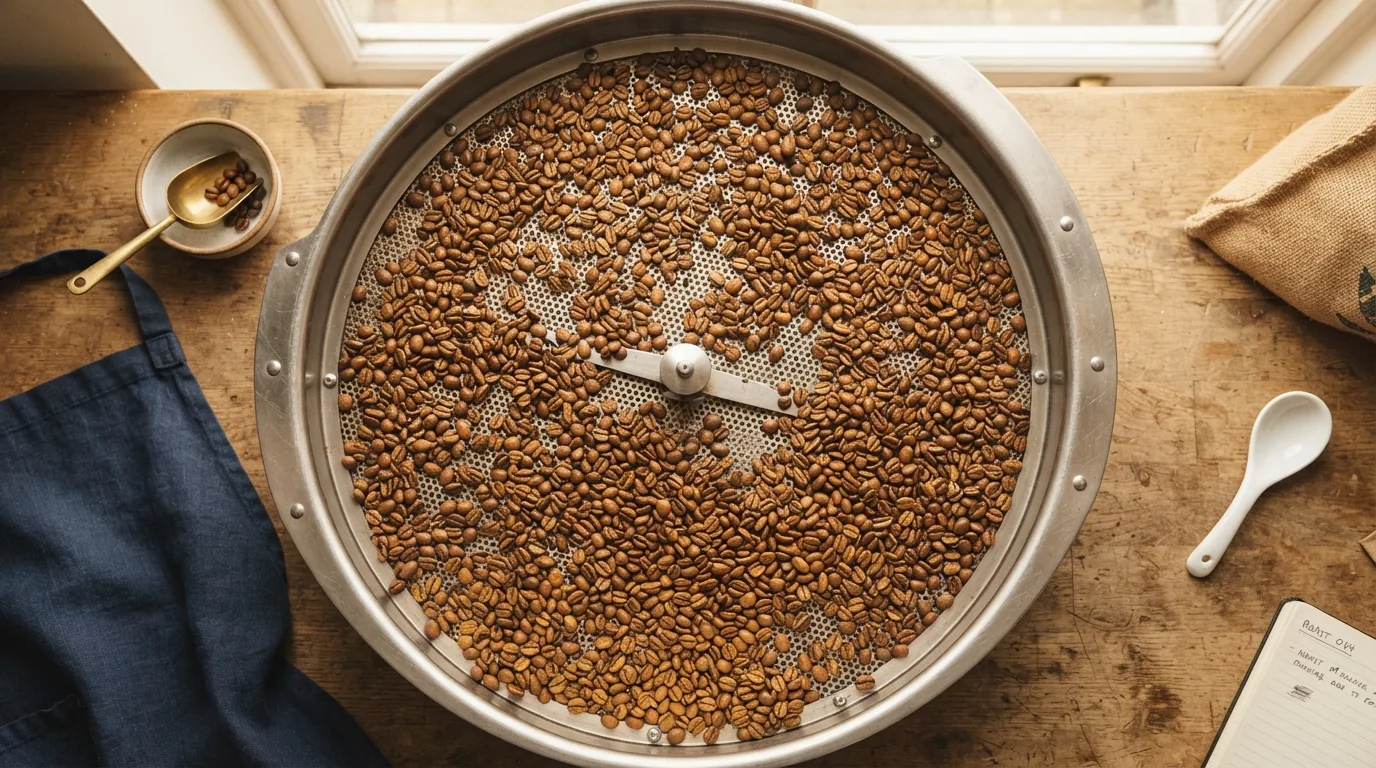
Fluid bed roasters use a column of hot air to keep the beans suspended and tumbling, the same basic principle as a popcorn popper, and they roast quickly and evenly with very little to maintain mechanically. Drum roasters instead tumble beans inside a rotating heated chamber, the same basic approach commercial roasters use at a much larger scale, and they generally support bigger batches and slightly different flavor development, at the cost of a larger footprint and a higher price tag.
Picking the Machine That Matches Your Batch Size
Fresh Roast SR540: For Learning the Craft First
The SR540 is a fluid bed roaster that finishes a 4oz batch in roughly 8 to 9 minutes, with fully manual airflow and heat controls that let you shape the roast curve by hand instead of relying on fixed presets. Its small batch size, which might read as a limitation on a spec sheet, is actually the point for a first roaster: mistakes stay cheap at 4oz, and you can dial in real technique on small batches before ever committing to a full pound at a time.

Fresh Roast SR540 Home Coffee Roaster
Amazon listing: Fresh Roast SR540 Coffee Roaster Bundle with Glass Extension Tube, Digital Coffee Scale & Green Coffee Beans
Fluid bed roasting, manual heat and fan control, roasts a 4oz batch in 8 to 9 minutes
“Roast date is the biggest freshness lever in coffee, bigger than origin, bigger than grinder quality. Owning a roaster really just means owning the ability to reset that date whenever you want.”
Hottop Programmable Coffee Roaster: A Programmable Roaster for Serious Hobbyists
The Hottop is a programmable drum roaster that handles roughly 9 oz batches. It is the most expensive pick in this guide and is for people who want repeatable roast profiles, not a casual try-out.
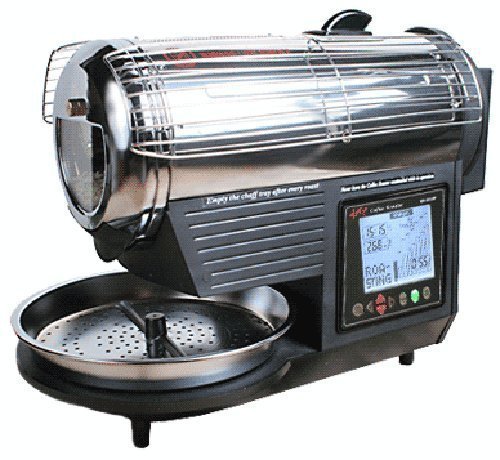
Hottop Programmable Coffee Roaster, Model B
Amazon listing: Hottop (9oz) Programable (Model: B Coffee Roaster
Programmable home drum coffee roaster, 9 oz batches
More Worth Considering
Nuvo Eco Ceramic Handy Coffee Bean Roaster: A Simple Ceramic Hand Roaster
The Nuvo Eco roaster is a ceramic vessel with a cowhide grip. You roast small amounts over a stove burner and shake by hand, so it costs very little and teaches the basics. It is slow and hands-on compared with a machine.
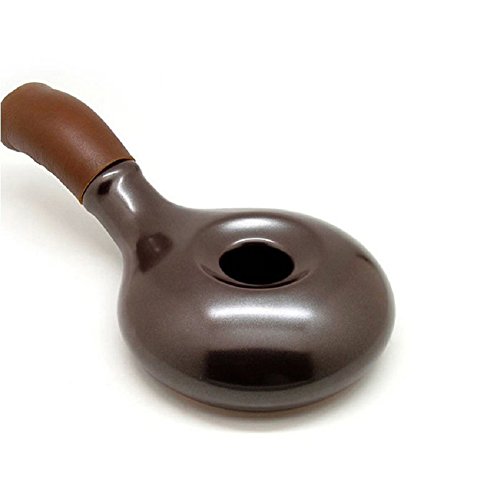
Nuvo Eco Ceramic Handy Coffee Bean Roaster
Amazon listing: Nuvo Eco Ceramic Handy Coffee Bean Roaster
Handheld ceramic coffee bean roaster with cowhide grip
Behmor 1600 Plus: For Anyone Roasting Enough to Actually Supply Themselves
Worth leading with this one if you already know you'll roast regularly. The Behmor is a drum roaster that handles up to a full pound of green beans per batch, roughly four times what the Fresh Roast can manage, and it saves programmable roast profiles that repeat a stored curve automatically rather than asking you to ride the controls manually every time. That capacity and repeatability make it the practical choice for anyone roasting enough to cover their own daily coffee rather than running small test batches.
Behmor 1600 Plus Drum Coffee Roaster
Drum roasting, up to 1lb batch capacity, programmable and repeatable roast profiles
Learning to Roast by Ear, Not Just by Timer
Both machines let you track progress through two audible milestones every home roaster eventually learns to listen for. First crack is a distinct, popcorn-like popping as trapped moisture and pressure inside the bean release rapidly, and it marks the start of technically drinkable coffee, the light-roast end of the spectrum. Second crack, a quieter and higher-pitched crackling that follows several minutes later if you keep going, signals the bean's cell structure breaking down further as oils migrate to the surface, the medium-dark to dark end. Learning to stop at a deliberate point between those two sounds, rather than defaulting to a fixed timer, is most of what separates a roast you actually dialed in from one you got lucky with.
What You're Actually Saving on Green Beans
Unroasted green coffee runs meaningfully cheaper than roasted retail bags, commonly $6 to $10 per pound from specialty green bean suppliers, before factoring in the roaster itself. For anyone roasting on a regular schedule, that per-pound gap adds up fast enough to offset a roaster's upfront cost within a year or two of consistent use, on top of the freshness benefit you're getting the whole time.
Nobody Warns You About the Chaff
Roasting produces real smoke and a light, papery byproduct called chaff that separates from the bean as it roasts and tends to drift. Both machines above need real ventilation, an open window or a range hood, not a closed room, to run comfortably. It's a genuinely messier hobby than brewing ever is, worth knowing before you buy in, though a few minutes of cleanup after each batch fully handles it.
Expect Your First Roasts to Be Inconsistent
Too light, too dark, or unevenly roasted, early batches from a new machine are the norm, not a sign something's wrong with the equipment. You're learning how your specific machine, your specific beans, and your ear for first and second crack all interact, and that takes a handful of batches regardless of which machine you start on. Our home coffee roasting guide covers the underlying fundamentals in more depth, and our bean storage guide covers protecting that fresh roast date once you've got a batch you're proud of.
Don't Brew It the Moment It Cools
Freshly roasted beans aren't actually at their best straight out of the roaster, they need a short rest first. Roasting traps carbon dioxide inside the bean, and brewing within the first day or two, before that gas has had a chance to escape, can produce a sharp or unevenly extracted cup as CO2 interferes with water contact during brewing. Most home roasters find a rest of 24 to 48 hours in a loosely sealed container, letting gas out without letting much oxygen in, produces a noticeably more balanced result than coffee brewed straight out of the roaster.