Six machines, six different reasons to buy one, and no single "best" among them once you get past the overall pick. We built this list from published specifications, current pricing, and where owner reports and professional reviews agree, not from whichever brand bought the most ad placements this year. Each entry earned its spot for a specific reason: consistency a beginner can actually achieve, build quality that holds up past year one, or a price that buys something a cheaper machine genuinely can't.
Four Specs That Matter More Than the Marketing Copy
Ignore the badge on the box for a second and look at four things instead: how the boiler is built, whether the machine controls temperature digitally, how much control you have over the pressure curve, and what the internals are actually made of.
Boiler configuration decides whether you're waiting around between a shot and steamed milk. A single boiler makes you choose one function at a time. A thermocoil heats water almost instantly for whichever function you need next but can lose a degree or two of stability if you're bouncing between shot and steam quickly. A true dual boiler runs both simultaneously, each independently temperature-controlled, which is why it's the format behind nearly every commercial machine.
PID control is a digital feedback loop that holds the brew water within about a degree of its target instead of letting an uncontrolled thermostat swing several degrees in either direction. Of everything on a spec sheet, this is the single feature most responsible for a shot tasting the same on Tuesday as it did on Monday.
Pressure profiling is how finely a machine can shape pressure across the shot, a gentle ramp instead of slamming to 9 bar the instant you start the pump. The more control you have here, the more room you have to rescue a bean that's fighting your grind settings.
Build materials get the least attention and matter the most over time. A stainless steel boiler and a brass group head hold heat and resist wear in ways plastic components simply don't, which is the real reason a $449 machine and a $2,000 machine can still feel similar on day one and completely different by year three.
The Six Machines, Ranked
1. Breville Barista Express Impress: Best Overall
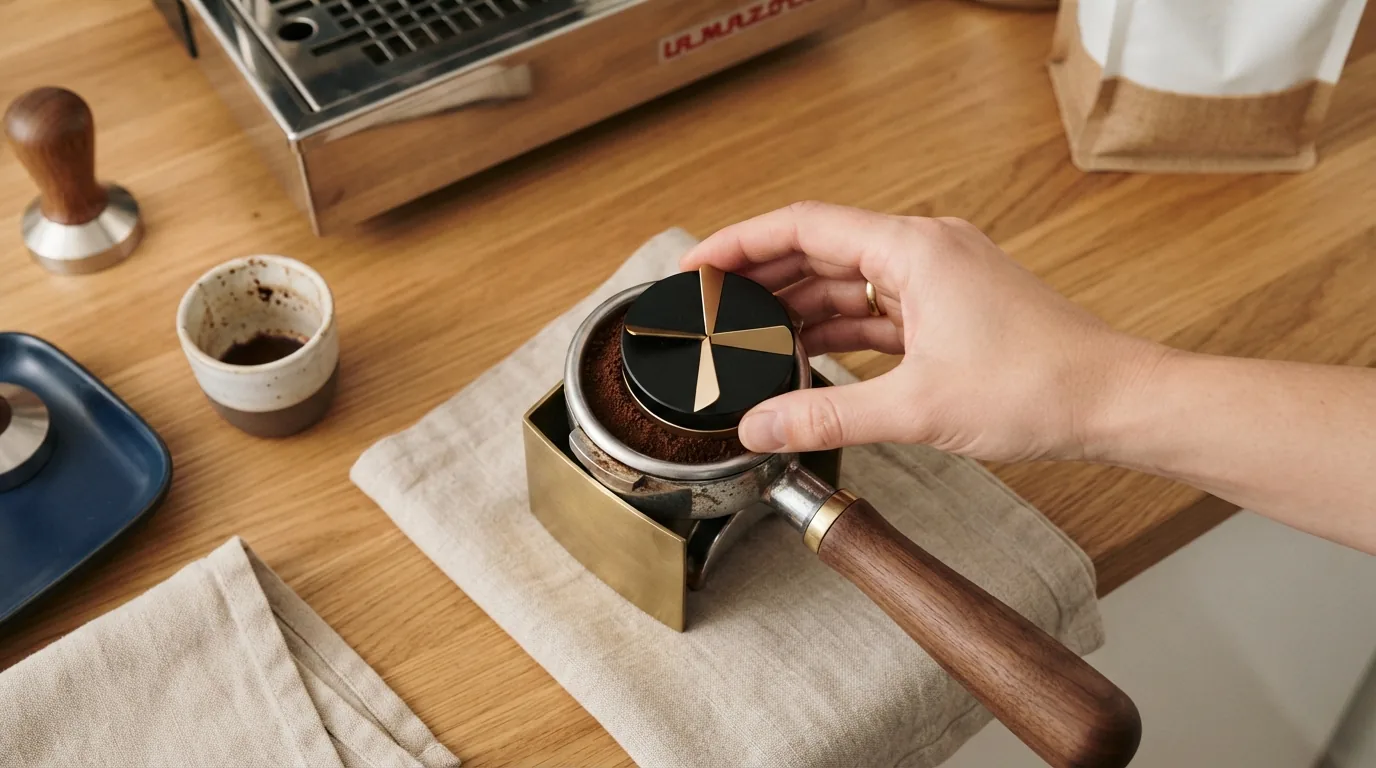
The Impress wins the overall slot by fixing the two mistakes that sink most beginners before they ever taste a decent shot: uneven dosing and an inconsistent tamp. Its built-in conical burr grinder feeds straight into the Impress Puck System, which applies roughly 22 lbs of tamping force with a short barista-style twist on every single puck, no technique required. Combine that with thermocoil heating under full PID control and a 15-bar Italian pump, and the machine is producing genuinely good espresso before you've built any manual skill at all, then keeps getting better as your palate does. It typically lists around $799.95 and is frequently found discounted closer to $699.95.

Breville Barista Express Impress
Amazon listing: Breville BES876BSS Barista Express Impress, Brushed Stainless Steel
Built-in conical burr grinder, assisted Impress tamping, thermocoil heating
2. Rancilio Silvia Pro X: Best for Consistency
The Silvia Pro X occupies the gap between prosumer and full commercial, pairing a true dual boiler with complete PID control at a price well below most machines built on commercial-derived hardware. Its steam wand punches well above its price class, producing microfoam faster than most home wands, and owners consistently cite its shot-to-shot repeatability as among the tightest available under roughly $2,200.

Rancilio Silvia Pro X
Amazon listing: Rancilio Silvia Pro X Espresso Machine, 1 liters, Stainless Steel
Dual boiler, full PID control, commercial-grade steam wand
3. Breville Barista Pro: Best Mid-Range
The Barista Pro swaps the Impress's assisted tamping for Breville's ThermoJet system, which gets water to temperature in roughly three seconds, and pairs it with a 30-setting grinder and a cleaner digital display. It's the better call for anyone who already tamps consistently and wants a faster morning rather than more hand-holding. List price sits at $849.95, though it's a machine that shows up on sale often enough that patient shoppers regularly land it well under $700.
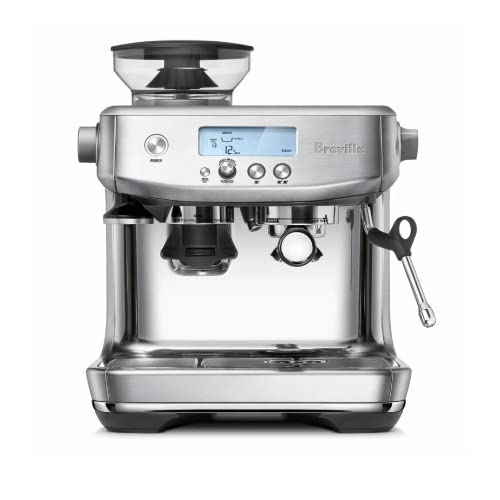
Breville Barista Pro
Amazon listing: Breville BES878BSS Barista Pro Espresso Machine, Brushed Stainless Steel
ThermoJet heating, 30-setting integrated grinder, digital temperature control, often discounted
4. Gaggia Classic Pro: Best Budget
The Classic Pro has built its reputation on not feeling like a budget machine once you're pulling shots from it. It runs a genuine 15-bar vibratory pump behind a commercial-style steam wand, and while the factory over-pressure valve ships set higher than ideal for espresso on most units, a roughly $15 spring swap (a common, well-documented mod in the home espresso community) brings it down to the 9-bar range most baristas consider correct. That upgradeability, paired with a large aftermarket of near-prosumer replacement parts, is exactly why it remains the entry point people actually stick with instead of replacing within a year.

Gaggia Classic Pro
Amazon listing: Gaggia RI9380/47 Classic Pro Espresso Machine,1.3liters, Cherry Red
Commercial-style steam wand, 15-bar pump, a well-known upgrade path to 9-bar extraction pressure
“The right machine is the one whose ceiling is higher than your current skill, not the one with the most features on the box.”
5. La Marzocco Linea Mini: Best Splurge
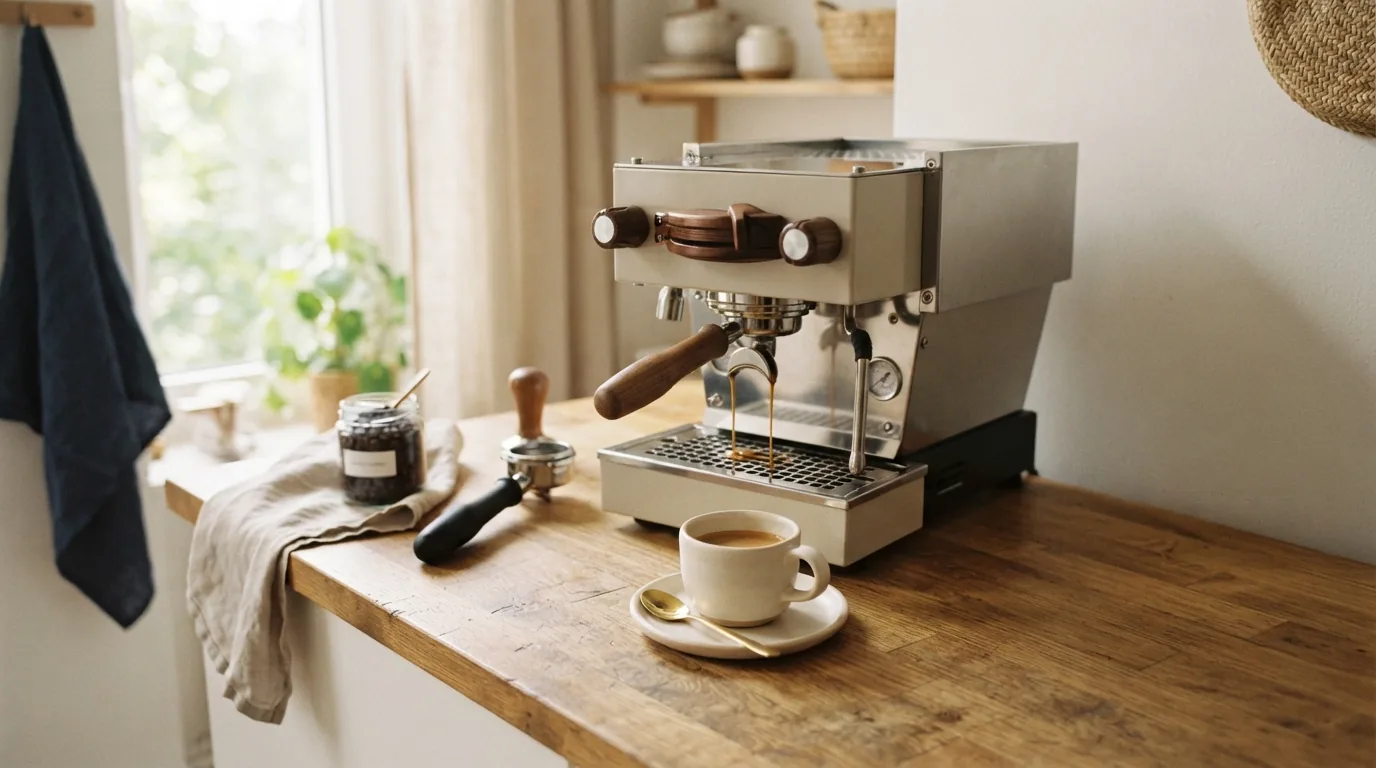
Strip away the smaller footprint and the Linea Mini is, functionally, the machine behind the counter at the best independent shops in the country, engineered down to fit a home kitchen. Its commercial-grade dual boilers hold temperature with a stability nothing near its price bracket matches, and the saturated group head is lifted straight from La Marzocco's professional line rather than a home-oriented redesign. This is the machine for someone who already knows precisely what they want from a shot and has stopped being willing to compromise to get it, at roughly $6,600 and sold only through La Marzocco's authorized dealer network rather than Amazon.
La Marzocco Linea Mini
Commercial-grade dual boiler with PID temperature stability, around $6,600
Not sold on Amazon: this links to Clive Coffee’s site.
6. Flair 58 Plus 2: Best Manual Lever
No motor, no pump, no algorithm standing between your hand and the shot. The Flair 58 Plus 2 is a fully manual lever machine that lets you shape the entire pressure curve in real time by feel, a level of direct control that even high-end electric machines can only approximate through software. It's the most demanding machine on this list to learn and, for the people who put in the time, the most rewarding. Pricing runs around $699, sold direct through Flair's own site rather than through a standard Amazon listing.
Flair 58 Plus 2
Fully manual pressure profiling, no electricity required, around $699
Not sold on Amazon: this links to Flair Espresso’s site.
How to Actually Pick One
If you want a single machine that erases the two most common beginner mistakes, inconsistent dose and an uneven tamp, the Breville Barista Express Impress is still the safest overall recommendation for 2026. If you already own a dedicated grinder and want the closest realistic approximation of a commercial bar at home, the Rancilio Silvia Pro X and La Marzocco Linea Mini are where the extra money is genuinely well spent. And if the entire appeal of espresso for you is mastering pressure and flow with your own hands, nothing else on this list, including machines costing far more, really substitutes for the Flair 58 Plus 2.
For more on how manual and automated formats diverge in daily use, our semi-automatic vs. super-automatic breakdown goes deeper on that specific tradeoff, and the full machine collection has individual reviews of every model above. If you already know you want one format specifically, see our dedicated rankings of the best super-automatic, dual-boiler, and all-in-one machines of 2026, or the budget-tier breakdown if the dollar amount is still the open question.