
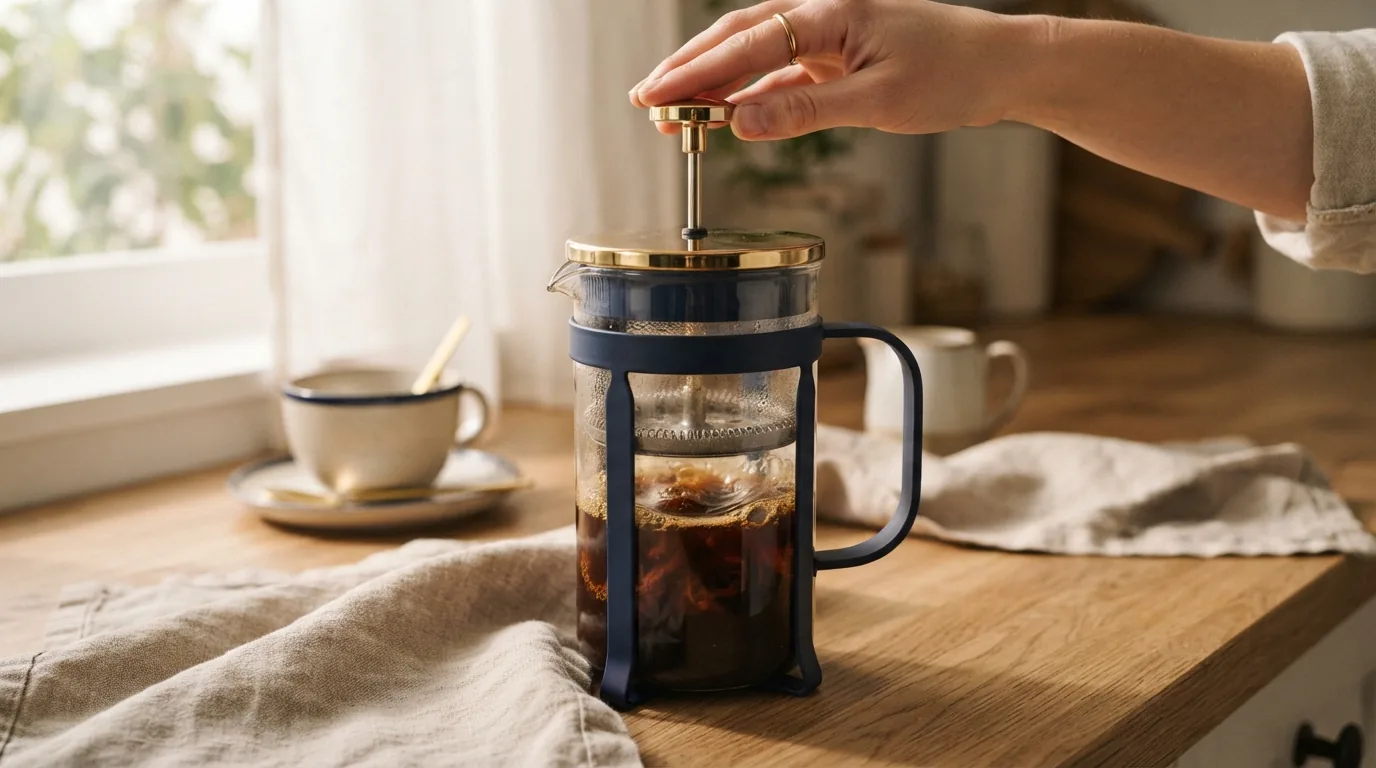
Strip away the marketing and a French press is one of the simplest brewers there is: coarse grounds steep directly in hot water, then a mesh plunger pushes the grounds to the bottom and separates them from what you're about to drink. That full-immersion method is also why French press coffee tastes noticeably heavier and more full-bodied than anything paper-filtered, the mesh lets oils and fine sediment through that paper would trap. The mechanism itself dates back roughly a century; what's actually changed recently is everything around it.
A Design With Two Known Weaknesses
Ask anyone who's used a classic glass French press daily what bothers them and the answer is usually one of two things: the coffee cools off fast, or the last few sips are gritty. Both are real, physical limitations of the original design rather than user error, and the three presses below represent three different ways manufacturers have addressed them without abandoning full immersion as the underlying method.
The Insulated, Modern Standard
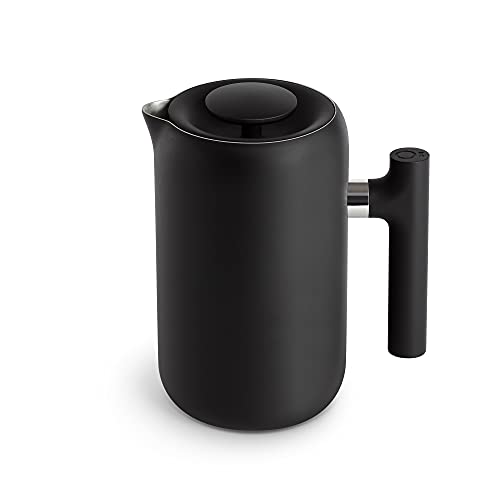
Fellow Clara French Press
Amazon listing: Fellow Clara Insulated Coffee Maker with Enhanced Filtration System - Portable French Press Stainless Steel…
Double-wall vacuum insulation for stable brew temperature, enhanced filtration mesh, all-direction pour lid, 24oz
The Fellow Clara tackles the heat-loss problem directly with double-wall vacuum insulation around the brewing chamber, the same principle behind a good vacuum flask, which keeps the brew at a more stable temperature through the full steep and keeps the finished coffee hotter afterward too. Its filtration mesh is a step up from a standard single screen, and the lid pours cleanly from any angle rather than requiring you to line up a single spout.
The Sediment Problem, Solved Separately

Espro P7 French Press
Amazon listing: ESPRO P7 French Press, 18oz, Brushed, Stainless Steel Coffee Maker
Patent-pending dual micro-filter system, double-wall vacuum insulated, 32oz
Espro went after the grit problem specifically: the P7 uses two nested micro-filters that snap together with a double lip seal instead of a single mesh screen, catching far more fine sediment before it reaches the cup. It's also double-wall insulated, so it inherits the Clara's heat retention as a second benefit rather than trading one weakness for the other.
“A French press hasn't needed a new brewing mechanism in a century. What it needed was a better filter and a body that doesn't lose heat the moment water hits it.”
Frieling Double-Walled Stainless Steel French Press: Double-Walled Stainless Steel
The Frieling is a 36 oz double-walled stainless steel press, so coffee stays warm much longer than in a glass press. It is built for durability and is a premium pick that suits slow mornings or serving a table.
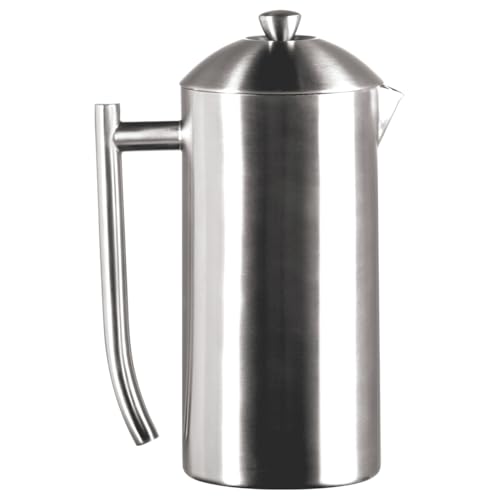
Frieling Double-Walled Stainless Steel French Press, 36 oz
Amazon listing: Frieling Double-Walled Stainless Steel French Press Coffee Maker - Brushed 36 oz (1 Liter) Insulated Coffee…
36 oz double-walled stainless steel French press
More Worth Considering
Bodum Brazil French Press: Borosilicate Glass Classic
The Bodum Brazil is a 12 oz borosilicate glass press, the iconic budget French press. It is a simple, low-cost way to start, though glass will not hold heat as well as the steel options here.

Bodum Brazil French Press, 12oz
Amazon listing: Bodum 12oz Brazil French Press Coffee Maker, High-Heat Borosilicate Glass, Black - Made in Portugal
12 oz borosilicate glass French press
The Original, Kept Simple
Bodum Chambord French Press
Borosilicate glass and chrome-plated steel, based on the plunger design patented in 1958, simple to source replacement parts for
The Chambord's plunger mechanism traces back to a French press patent filed in 1958; Bodum began manufacturing its own version in the 1970s and it's been in continuous production since. It doesn't solve either weakness above, glass loses heat and a single mesh lets some grit through, but that's also the appeal: nothing here to malfunction, and replacement glass carafes and screens are easy to find decades into owning one.
Why Grind Size Is Non-Negotiable Here
Every French press, regardless of which of these three you buy, needs a coarse, uniform grind, roughly the texture of coarse sea salt. Too fine and grounds slip past even a good mesh while the brew over-extracts into bitterness; too coarse and the coffee comes out weak and underdeveloped. Our French press vs pour-over vs AeroPress guide covers how grind and steep time interact for this method specifically.
What "8-Cup" Actually Means
French press capacity is measured in small coffee-cup units, not full mugs, so an 8-cup or roughly 34oz press realistically pours about four normal-sized mugs, not eight. Undersizing means brewing twice for a household of two or three; oversizing for someone who drinks a single cup a day just wastes beans, since leftover French press coffee keeps steeping and degassing in the carafe and goes flat fast if it isn't served right away.
The Grinder Matters as Much as the Press
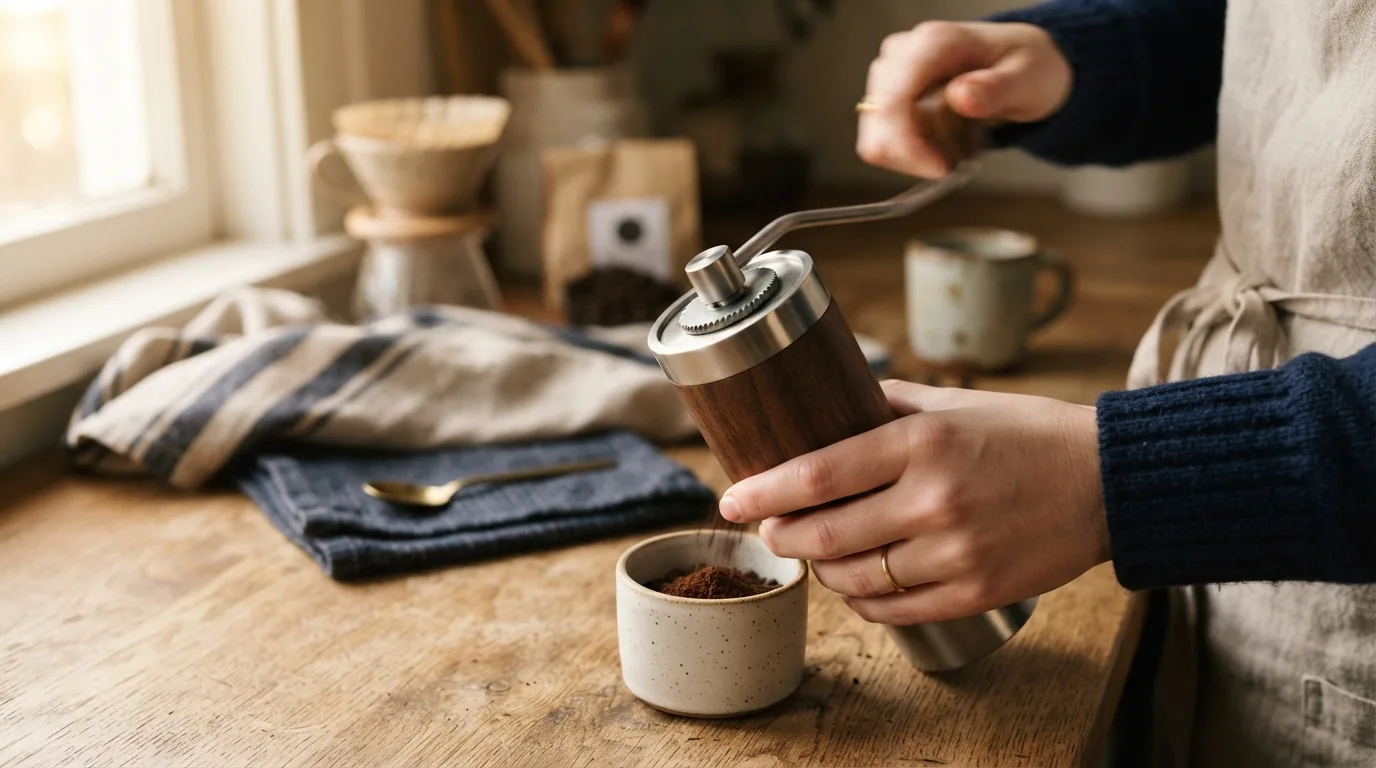
A blade grinder produces wildly inconsistent particle sizes, a mix of fine dust and coarse chunks in the same batch, and no amount of filter engineering fully compensates for that at the extremes. Our best manual hand grinders guide covers grinders built for the specific, consistent coarse grind a French press actually needs.