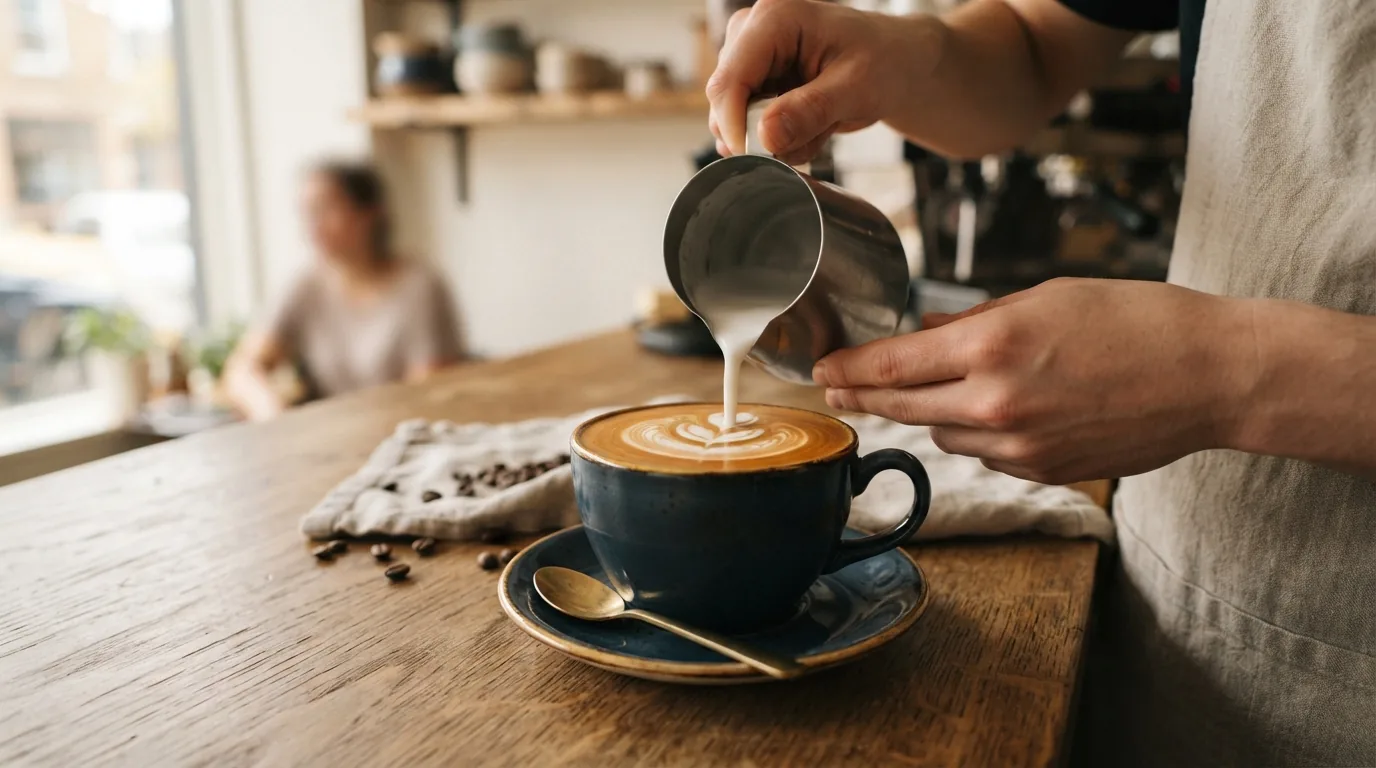
Ask ten people why they'd never buy a super-automatic espresso machine and most will say some version of "it's cheating." Ask ten super-automatic owners why they'd never go back to a portafilter and most will say some version of "who has time for that." Neither camp is wrong. They're answering different questions, because a semi-automatic and a super-automatic aren't really two versions of the same appliance. They're two different answers to the question of who does the work of turning ground coffee into a good shot: you, or the machine.
Specs make this look like a budget decision, and at the low end it partly is. But two machines with nearly the same pump, the same water system, and the same rated pressure can produce a completely different morning, because the mechanical difference between them is smaller than the difference in how much of the extraction process lands on you.
What a Super-Automatic Actually Does For You
Start here because it's the easier machine to describe: a super-automatic grinds a fresh dose on demand, meters it by weight or volume, tamps it internally, and drives the shot through a pre-set pressure and flow profile. Many finish the drink by texturing milk automatically. Your job is beans in, water in, cup under the spout, button pressed. Nothing about the process asks you to learn what a "channeled" shot looks like or feels like.
That trade buys real things. A four-person household can each get a different drink before anyone's finished their first sentence of the morning. Bean freshness that would throw off a beginner on a manual machine gets absorbed by the internal grinder and dosing logic, which is tuned to stay within a workable range rather than chase perfection. What it can't buy is correction. If a shot's running a touch fast today, you're not adjusting a burr mid-pour, you're working within whatever range of settings the manufacturer exposed in the menu, and on cheaper units that range is thin.
Our Picks in Each Category

Breville Barista Express Impress
Amazon listing: Breville BES876BSS Barista Express Impress, Brushed Stainless Steel
Integrated grinder and assisted tamping remove the hardest part of the learning curve
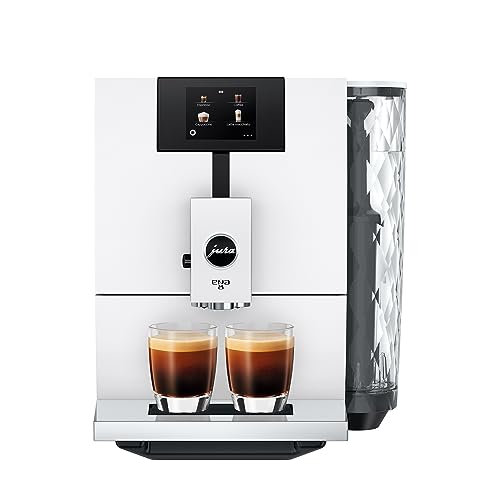
Jura ENA 8
Amazon listing: Jura ENA 8 Touchscreen Full Nordic White #15495
One-touch espresso and milk drinks with genuinely capable internal grinding and dosing

Gaggia Classic Pro
Amazon listing: Gaggia RI9380/47 Classic Pro Espresso Machine,1.3liters, Cherry Red
A commercial-style steam wand and fully manual control at an entry-level price
Does Manual Control Actually Taste Better?
In experienced hands, yes, consistently. A person who's been pulling shots on the same machine for months can taste a problem, a slightly stale bag, a humid afternoon, a fresh roast that needs a coarser grind, and correct for it before the next cup. No super-automatic currently senses roast date or ambient humidity and adjusts on its own; it reacts to what its internal sensors measure, which is a narrower slice of the picture.
But "experienced hands" is carrying real weight in that sentence. A beginner on a semi-automatic machine is often wildly inconsistent for weeks, while a super-automatic, precisely because it removes the variables a novice is most likely to botch, will frequently out-produce that same beginner during the learning period. As internal pressure profiling and grind calibration on higher-end super-automatics have genuinely improved, that early gap has narrowed. For a lot of home drinkers, it's now small enough that convenience wins the argument outright.
A Faster Way to Decide
Skip the feature checklist and ask three more useful questions instead.
Do you want to get better at this, or just get coffee? If the idea of dialing in a new bag of beans sounds like a hobby rather than a chore, a semi-automatic will hold your interest for years. If espresso is just something you want to exist each morning with minimum friction, a super-automatic removes the friction entirely.
How many people, how many drinks, how little time? One person making one careful drink is the semi-automatic's ideal customer. Multiple people wanting different drinks on a tight morning schedule is the super-automatic's. The more the "before work" clock matters, the more that tilts toward one-touch.
What's the real budget, counter space included? A semi-automatic paired with a separate grinder often costs less to get into but eats more counter space across two boxes. A super-automatic folds the grinder into one footprint, which matters in a small kitchen, at a real price premium for that convenience. Our budget-tier breakdown walks through what each price bracket actually buys.
What a Semi-Automatic Actually Asks of You
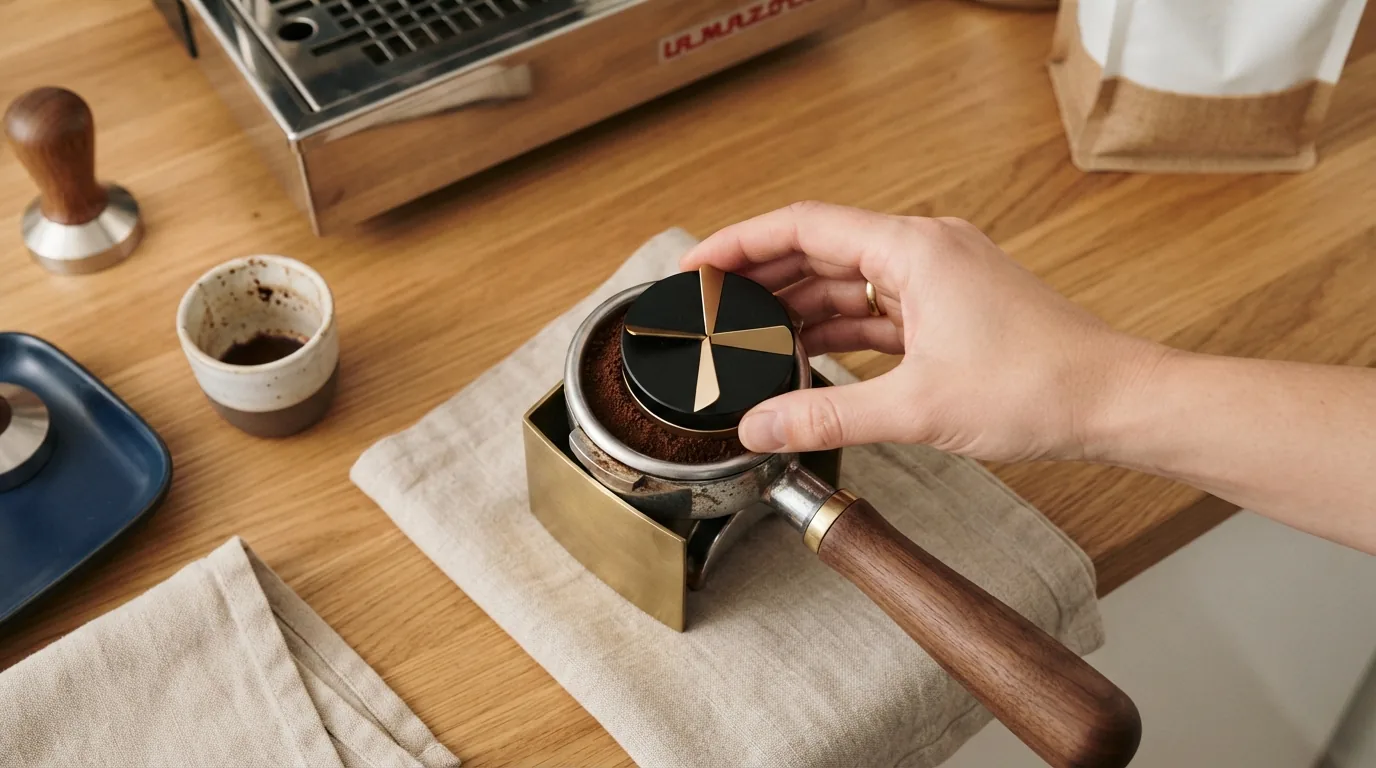
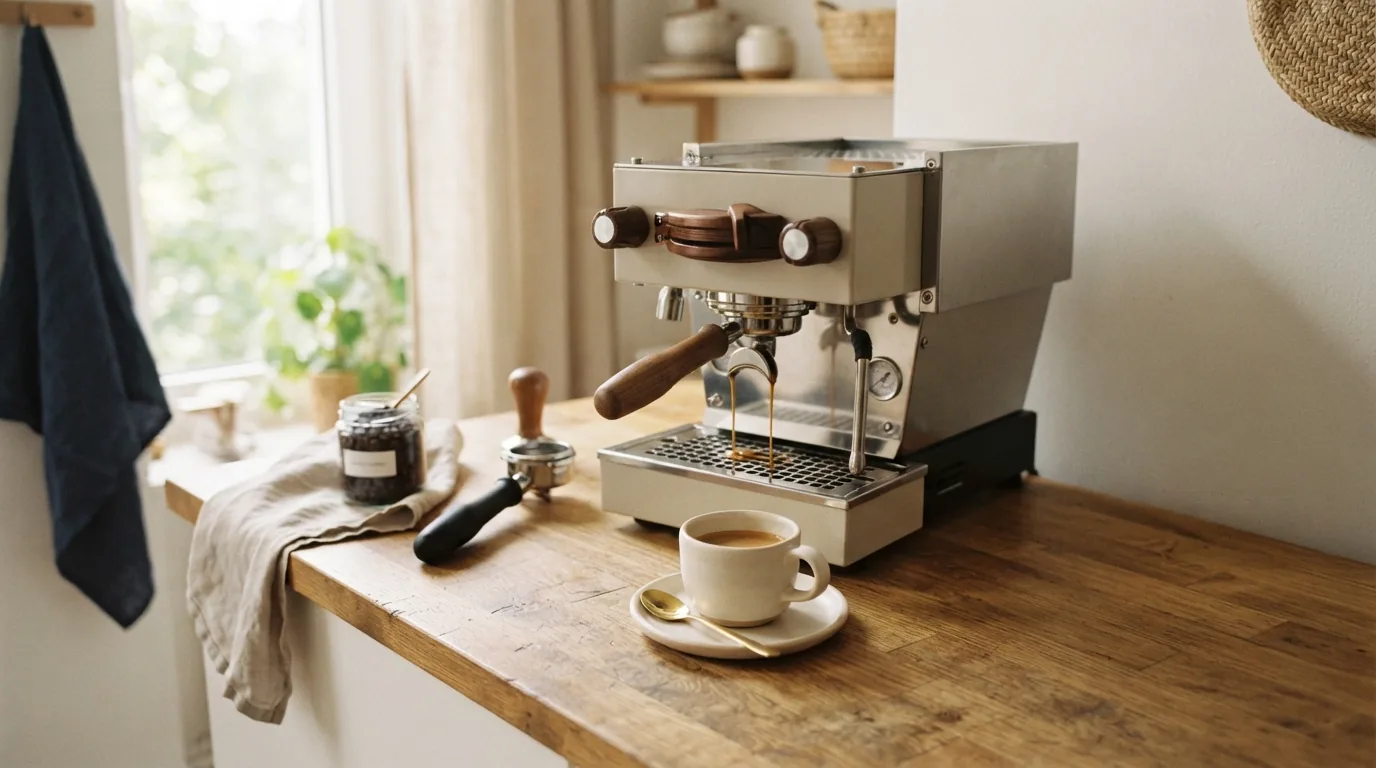
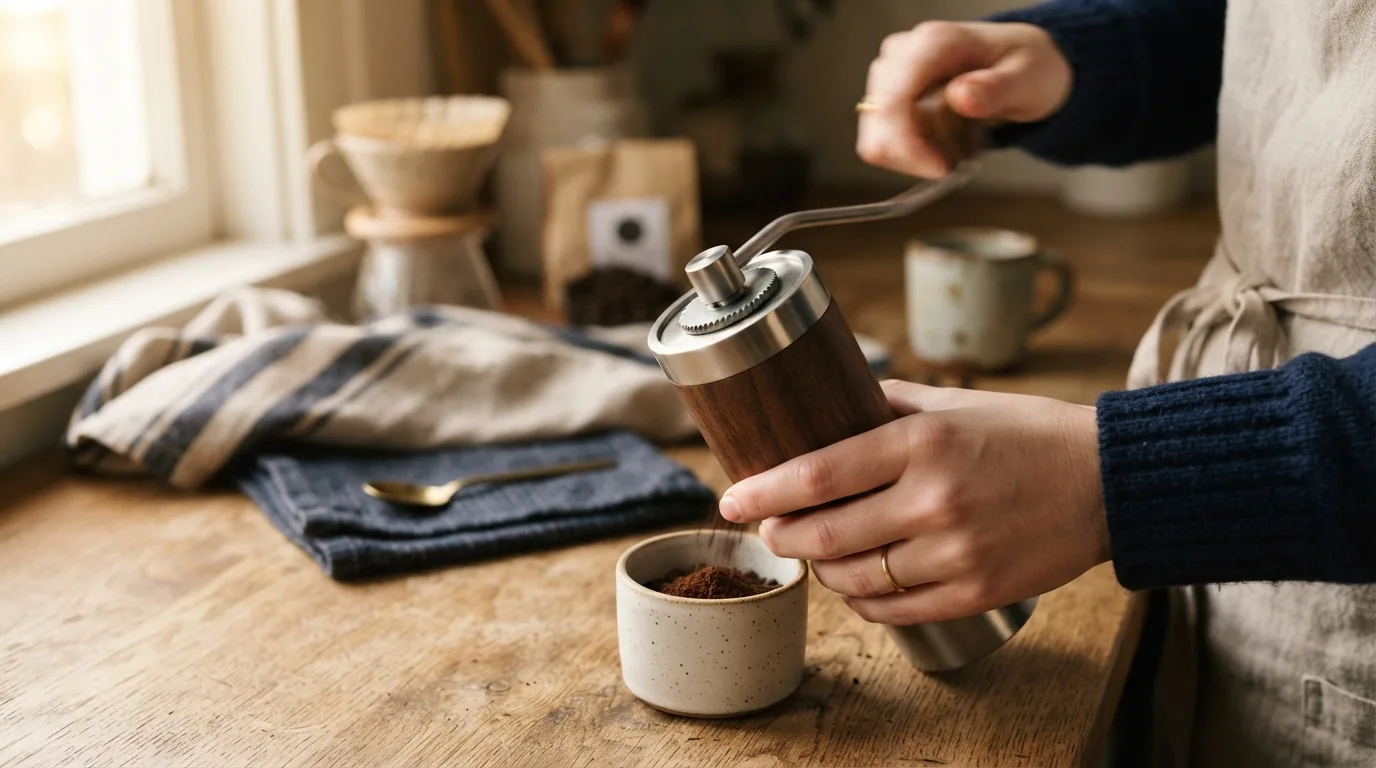
A semi-automatic machine hands you a portafilter, a pump you start and stop yourself, and either a built-in or separate grinder, then steps back. Grind the dose, distribute it evenly across the basket, tamp it level, lock it into the group head, and start the shot with your own hand on the switch. You watch it come down, you taste it, you decide whether the next one needs a finer grind or a different dose.
This is the format nearly every professional bar still runs, and it's not tradition for its own sake. Grind size, dose, distribution and tamp pressure are the handful of variables that most directly shape how a shot tastes, and a semi-automatic puts every one of them under your direct control. A sour, thin shot means tighten the grind next time. A harsh, bitter one means back it off. Nobody is waiting on a firmware patch to fix a bad cup; you're adjusting a burr and pulling again.
Breville Barista Express Impress
Amazon listing: Breville BES876BSS Barista Express Impress, Brushed Stainless Steel
Built-in conical burr grinder with assisted tamping
The honest tradeoff is a learning curve, and it's real. Expect your first several attempts to run inconsistent while your hands learn what an evenly tamped, correctly dosed puck actually feels like versus one that's lopsided or too loose. That awkward stretch is also the entire point: a semi-automatic keeps rewarding better technique with a better cup indefinitely. There's no software ceiling capping how good your shot can eventually get.
“The best machine isn't the one with the most features. It's the one whose control model matches how much of the process you actually want to own.”
More Worth Considering
Breville Bambino Plus: Automatic Steam Wand, Manual Everything Else
The Bambino Plus is a compact semi-automatic machine with an automatic steam wand that lets you set milk temperature and texture. It is an easy way into semi-automatic espresso, though you will need a separate grinder.

Breville Bambino Plus
Amazon listing: Breville BES500BSS Bambino Plus Espresso Machine, Brushed Stainless Steel
Compact semi-automatic espresso machine with automatic steam wand
Philips 3200 Series LatteGo: Super-Automatic at a Lower Price
The Philips 3200 grinds, brews and froths milk with LatteGo at the touch of a display, with five coffee varieties. It is a more affordable way into super-automatic espresso than the Jura models.

Philips 3200 Series LatteGo
Amazon listing: Philips 3200 Series Fully Automatic Espresso Machine, LatteGo Milk Frother, 5 Coffee Varieties, Intuitive…
Fully automatic espresso machine with LatteGo milk system
Conclusion
Neither format is objectively better, only better matched to a specific morning. If you're still weighing it, our full machine collection covers every format in more depth, and our best espresso machines 2026 ranking is the next stop if the semi-automatic route with a built-in grinder sounds like the right entry point for your counter.